Desert Star HVAC — AC Repair, Installation & Maintenance in Phoenix, AZ
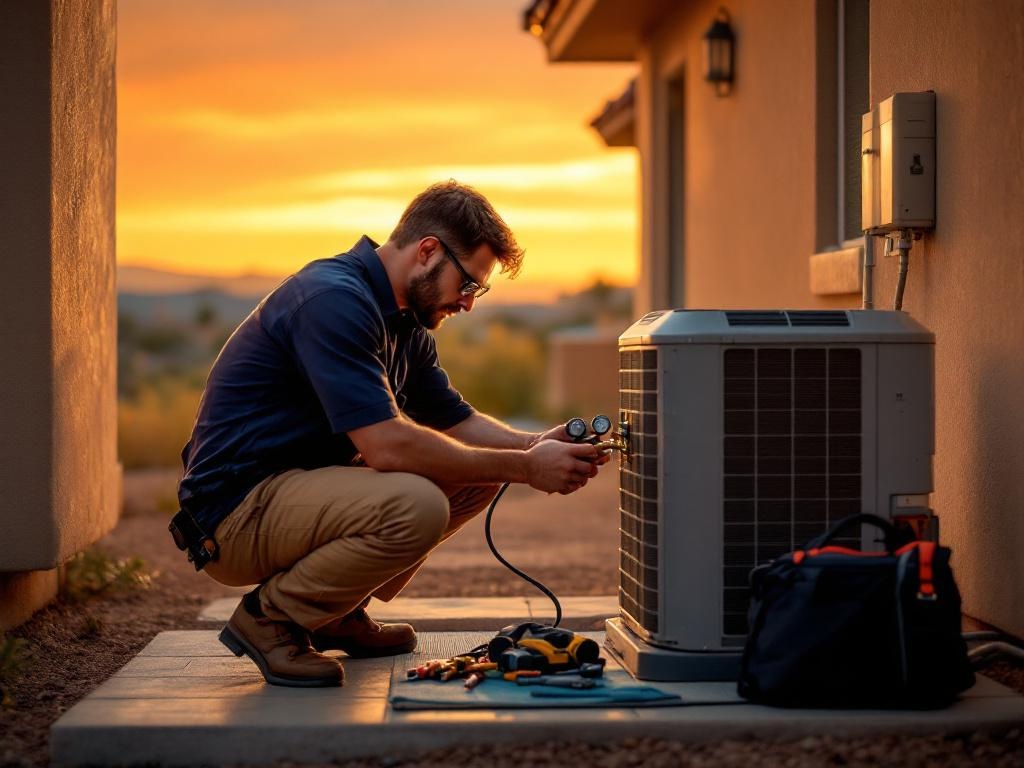
Photorealistic cinematic 8K photograph of a male HVAC technician in his mid-30s
Available 24 / 7

Phoenix Summers Don't Wait — Neither Does Desert Star HVAC

When your AC dies at 110° on a Friday afternoon, a three-day service window isn't an option. Desert Star HVAC shows up same day, quotes a flat price before we touch anything, and sends licensed technicians — not whoever picked up the phone at a dispatch center.

Licensed & Insured
Same-Day Service
Free Estimates

What We Do

Our Services

Get a Free Quote
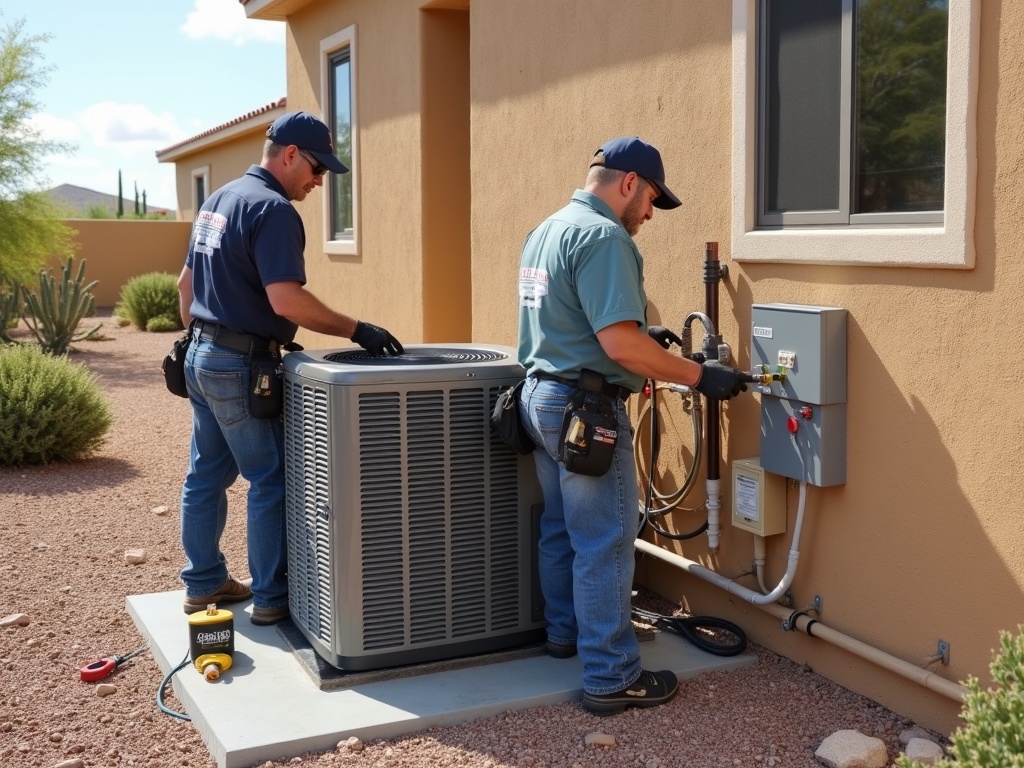
Photorealistic 8K photograph of two HVAC technicians installing a new residentia
01

HVAC Installation

01

HVAC Installation

Installing a new system in Phoenix isn't a one-size-fits-all job — a unit that's undersized for desert heat loads will run nonstop, drive up your APS bill, and fail years ahead of schedule. Our technicians perform a Manual J load calculation on every installation, selecting the right tonnage and SEER rating for your home's specific insulation, window placement, and sun exposure. We handle all electrical, refrigerant, and ductwork connections to manufacturer spec, pull permits, and schedule city inspection so your new system is code-compliant from day one. Phoenix homeowners get a system sized for the desert they actually live in — not the national average.

Schedule Service
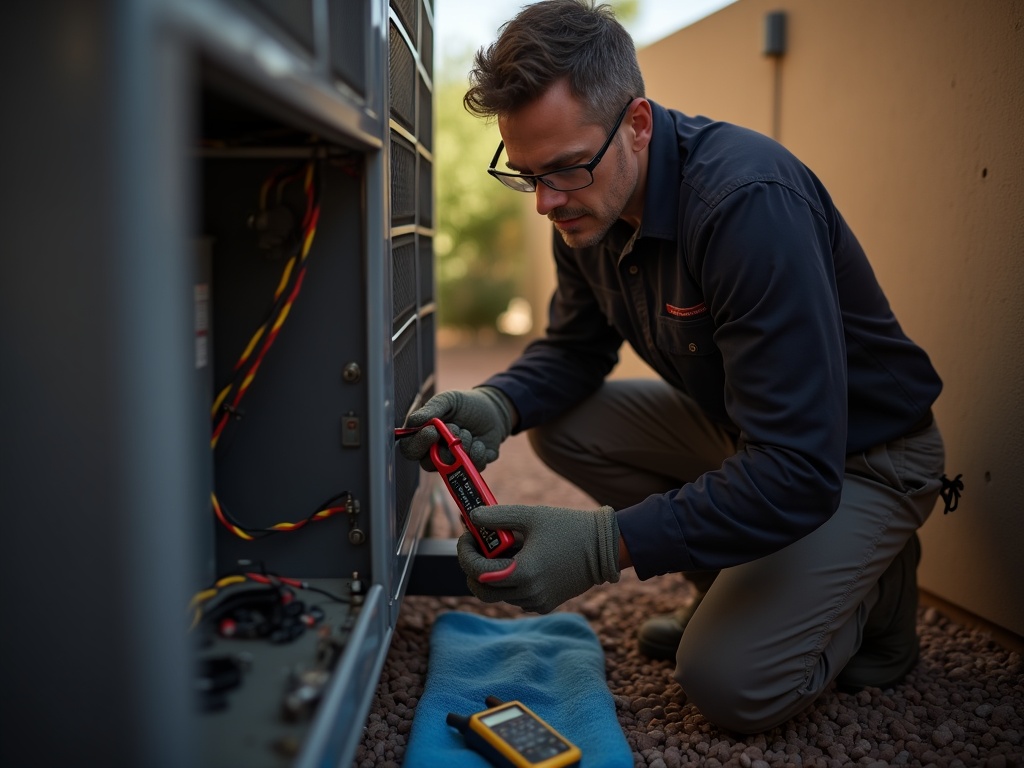
Photorealistic 8K close-up action photograph of an HVAC technician diagnosing a
02

AC & Heating Repair

02

AC & Heating Repair

When something breaks in Phoenix, the diagnostic and fix need to happen the same day. Our technicians carry the most common failure components on every truck — dual-run capacitors, contactors, fan motors, circuit boards, and refrigerant — because those are the parts that actually fail under sustained desert heat. We run a full system diagnostic to find the root cause, not just the symptom, give you a flat-rate price before any work starts, and complete the repair on the spot in most cases. If same-day completion isn't possible for any reason, we'll tell you exactly why before you've paid a dollar.

Schedule Service
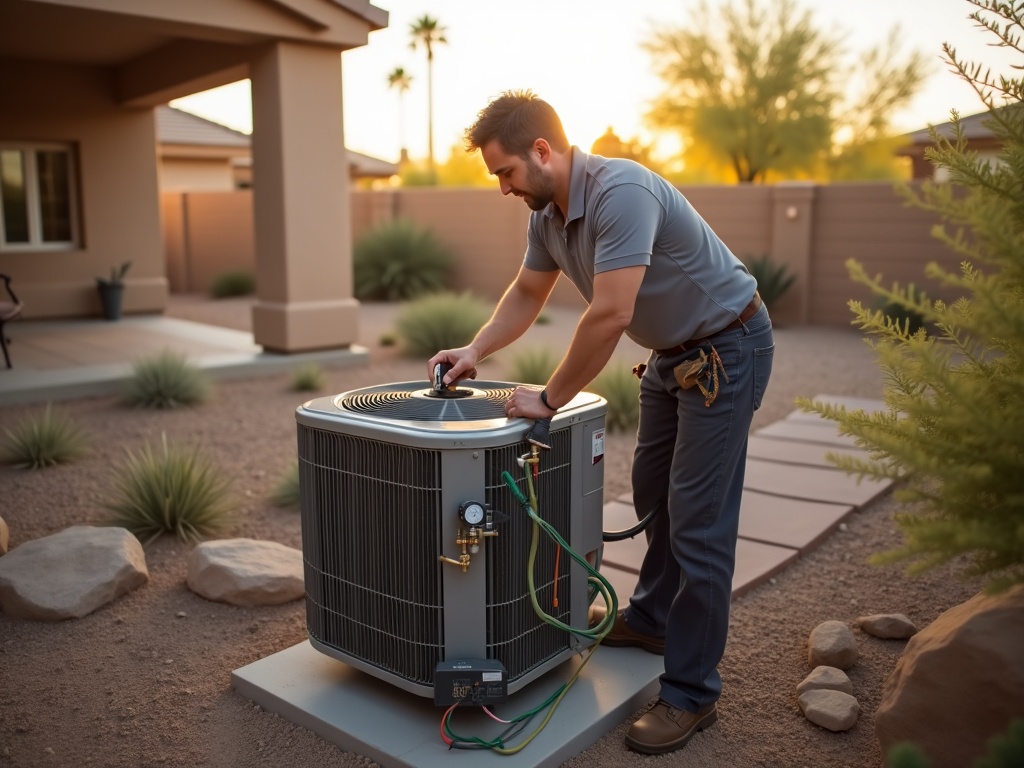
Photorealistic 8K photograph of an HVAC technician performing a preventive maint
03

Preventive Maintenance

03

Preventive Maintenance

Phoenix HVAC systems log more annual runtime hours than almost anywhere in the country — eight to nine months of cooling demand versus the national average of three or four. A Desert Star maintenance visit covers coil cleaning, capacitor and contactor load testing, refrigerant level check, condensate drain line flush, filter inspection, and a full electrical safety check on contactors and disconnect. Catching a failing capacitor in March costs around $150. Replacing a compressor that burned out in August because of it costs ten times that. We schedule spring tune-ups before cooling season and fall checks before heating season to keep your system ahead of the demand curve.

Schedule Service
Photorealistic candid photograph of a male HVAC contractor in his late 40s stand

About Us

Phoenix-Hardened HVAC. No Runaround, No Subs.

Phoenix heat doesn't give you a warning — it's 112° outside and your AC stops blowing cold without any notice. We built Desert Star HVAC around that exact reality. Every truck that leaves our lot is stocked with the parts that fail most often in Arizona's desert climate: dual-run capacitors, contactors, fan motors, refrigerant, and circuit boards. We run our own licensed crew on every job — no subcontractors, no temp labor — so the technician who shows up actually knows our standards and stands behind the work. Our pricing is flat-rate and written down before any work begins, which means no invoice surprises after a long, hot day. We work throughout Phoenix and treat every call like your house is on our street.

Licensed & Insured
Locally Owned & Operated
Same-Day Service Available

Our Difference

Why Phoenix Homeowners Call Desert Star

01

Flat-Rate Price Before Any Work Starts

You receive a written price before a single bolt turns. No hourly billing surprises, no 'we found something else' add-ons mid-job. What we quote is what you pay — full stop.

02

Company Employees on Every Job — Zero Subs

Every technician who comes to your home is a Desert Star employee, background-checked and trained on our own standards. We do not broker your job to a third-party crew based on who's available that afternoon.

03

Trucks Stocked for Arizona's Most Common Failures

Capacitors, contactors, and fan motors fail at elevated rates under sustained desert heat. Our trucks carry those parts on every run, which means most Phoenix repairs are completed on the first visit — not after a parts order.

04

EPA 608 Certified for All Refrigerant Work

We hold EPA Section 608 certification for refrigerant recovery, recycling, and charging — required by federal law for any technician handling refrigerants. Not every contractor advertising in Phoenix can legally touch your refrigerant lines.

05

Same-Day Emergency Slots During Peak Season

We hold same-day appointment availability specifically for no-cool emergency calls throughout Phoenix's summer. Call before noon and we will do everything in our power to have a technician at your door before the day is over.

Ready to work with the best?

Get a Free Estimate

Our Work

Project Gallery

6 photos

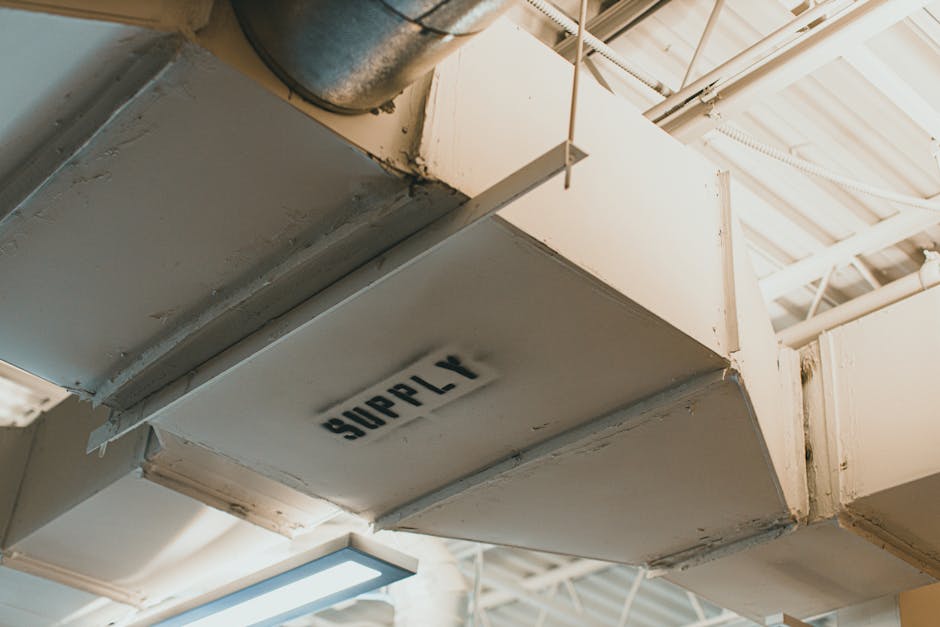
Desert Star HVAC — Close-up view of an air duct labeled 'SUPPLY' in an industrial setting.

Photo: Jonathan Cooper / Pexels

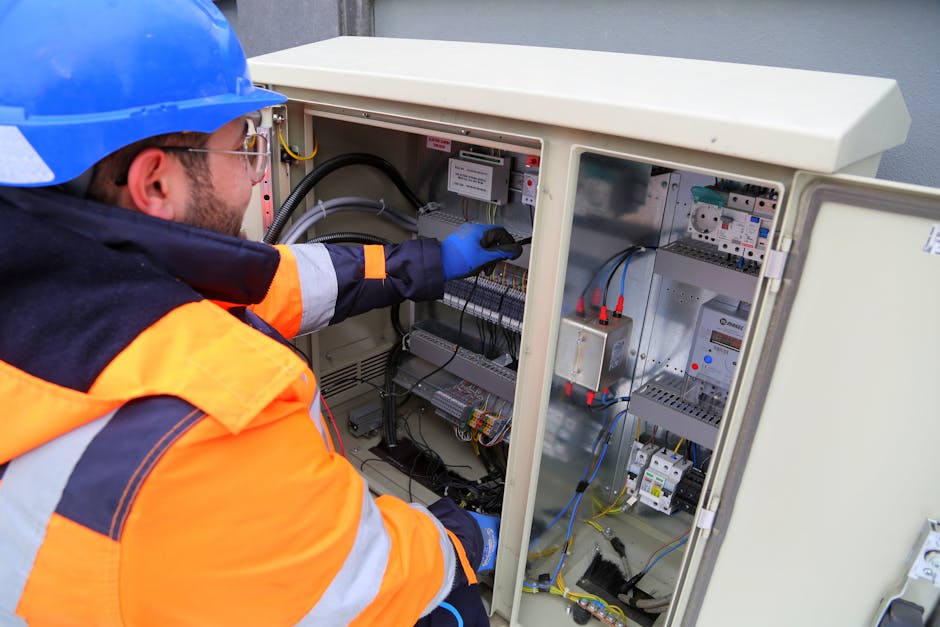
Desert Star HVAC — Engineer in safety gear working on an outdoor electrical panel, ensuring system functionality.

Photo: Fatih Yurtman / Pexels

Desert Star HVAC — Young courier delivering a package in a suburban neighborhood, wearing a cap and holding a clipboard.

Photo: Tima Miroshnichenko / Pexels

Desert Star HVAC — A Ballu air conditioner condenser unit mounted on a building exterior, showcasing modern HVAC technology.

Photo: Paolo Rossa / Pexels

Desert Star HVAC — Fire truck with Spanish labeling parked inside a station visible through red gate.

Photo: Oscar Sánchez / Pexels

Desert Star HVAC — Professional real estate agent sealing a deal with a senior client indoors through a handshake.

Photo: Kampus Production / Pexels

Got Questions?

Frequently Asked Questions

In most of the country, a well-maintained central AC system lasts 15 to 20 years. In Phoenix, a realistic lifespan is 12 to 15 years — sometimes shorter if the system was undersized at installation or skipped regular maintenance. The desert climate puts extreme stress on compressors, capacitors, and condenser coils, and systems here run roughly twice the annual hours of systems in northern climates. If your system is over 10 years old and facing a major repair, it's worth having an honest conversation about whether the repair math still makes sense versus a new installation.

The most common cause in Phoenix is a failed dual-run capacitor — the component that helps both the compressor and fan motor start under load. When it fails, the compressor can't kick on and you get room-temperature air from the vents. Other frequent causes include low refrigerant from a slow leak, a burned contactor, or a frozen evaporator coil caused by restricted airflow. Capacitors and contactors are inexpensive parts that can almost always be replaced same day. One important note: refrigerant doesn't just 'run low' on its own — if your system is short on refrigerant, there's a leak somewhere that needs to be found and repaired, not just topped off.

Twice a year is the right answer for Phoenix — once in late February or early March before cooling season starts, and once in October before the heating season. The spring visit is by far the more important of the two: that's when a technician can catch failing capacitors, test contactors under load, check refrigerant levels, and clean condenser coils before your system faces four straight months of near-constant operation. Most of the emergency calls we get in July and August trace back to a maintenance item that would have cost under $200 to address in March.

A widely used rule of thumb: if the repair cost is more than 50 percent of the cost of a new system and the unit is over 10 years old, replacement usually wins financially. In Phoenix that calculation shifts a bit because of the long cooling season — upgrading to a higher-SEER system can meaningfully reduce your monthly APS or SRP bill, sometimes making replacement cost-effective sooner than you'd expect. We'll give you both numbers when you're facing a major repair decision and let you choose without any push in either direction.

Rule-of-thumb sizing — the old '1 ton per 500 square feet' shorthand — doesn't work reliably in Phoenix, where sun exposure, insulation quality, attic depth, window placement, and glass type all have an outsized impact on actual cooling load. The correct approach is a Manual J load calculation, which accounts for all of those variables. An oversized unit will short-cycle, meaning it cools too fast without removing enough humidity; an undersized unit will run continuously and still leave rooms warm on peak days. We run a Manual J on every installation job so your new system is sized for your house, not the average house.

A breaker that trips repeatedly when the AC runs is a warning sign, not just an annoyance. The most common causes are a compressor that's drawing excessive amperage as it begins to fail, a short or damaged wire in the system, a capacitor that's causing a motor to work too hard to start, or a breaker that's worn out and tripping below its rated amperage. Running the system in a breaker-tripping condition risks burning out the compressor — the single most expensive component in the system. If your breaker has tripped more than once, have the system diagnosed before resetting it again.

Coverage

Where We Work

Not sure if we cover your area? Give us a call — we always do our best to accommodate.

Phoenix

Reach Out

AC Down or Ready to Schedule? We Pick Up.

Call Anytime(602) 555-0184

Location

4821 W McDowell Rd, Phoenix, AZ 85035

Typical response: under 1 hour

Request a Free Estimate

No spam. We'll only contact you about your request.